
Why Is THCA Flower Sticky?
That tacky feel usually comes from resinous glandular trichomes on the flower. Those tiny structures produce and store cannabinoids and aromatic compounds, but stickiness by itself is not a reliable potency or safety test.
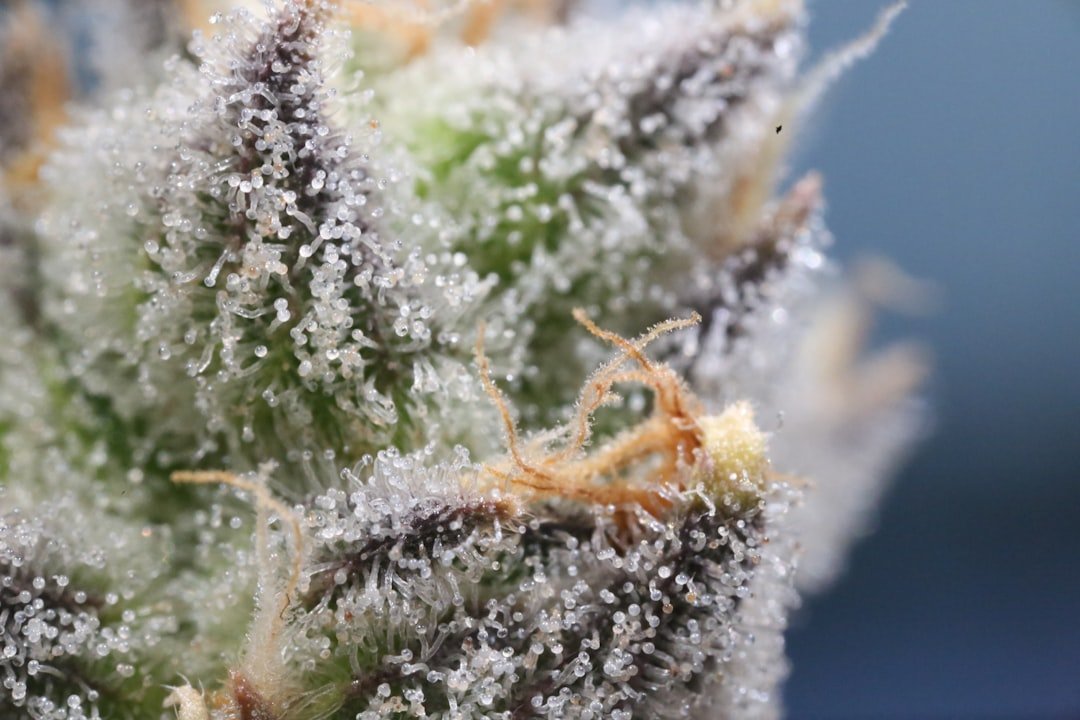
Photo by XRP Relic on Unsplash.
The source of the stickiness
Female cannabis flowers are covered with microscopic glandular structures called trichomes. Their resin contains cannabinoids such as THCA and volatile compounds including terpenes. When resin reaches the surface or trichome heads press against one another, the flower can feel tacky.
Trichome stalk
A tiny support that lifts the gland above the flower surface.
Glandular head
The rounded top where specialized cells produce plant metabolites.
Resin-rich cavity
The area where cannabinoids and aromatic compounds accumulate before handling, drying, or age changes the structure.
Sticky, frosty, greasy, or damp?
These textures are not interchangeable. Use the whole picture, including aroma, appearance, storage condition, packaging, and the product's lab report.
| What you notice | What it may mean | What to do |
|---|---|---|
| Light tackiness | Resin on intact or gently pressed trichomes | Handle lightly and check the batch COA |
| Frosty but not sticky | Visible trichomes that may be dry, mature, or brittle | Do not assume low potency from touch alone |
| Greasy or smeared | Warmth, compression, or heavy handling may have spread resin | Inspect aroma and package condition |
| Wet, spongy, or musty | Possible excess moisture or poor storage | Do not use flower that appears moldy or smells musty |
| Powdery or fuzzy patches | Possible contamination or mold, not normal trichome frost | Set it aside and contact the seller |
Does sticky flower mean stronger flower?
What stickiness can suggest
The surface still has resin, the flower has not been excessively handled, and the cultivar or cure naturally produces a tackier texture.
What stickiness cannot prove
Exact THCA content, terpene percentage, freshness, legal compliance, absence of contaminants, or how the product will feel for a particular person.
A flower can be very sticky and test lower than expected. Another can feel drier while still carrying a strong cannabinoid profile. Compare the texture with the lab report, aroma, packaging date when available, and storage condition.
Why the texture changes
Genetics and maturity
Research shows trichome number, form, resin release, and maturation vary by genotype and plant age.
Drying and curing
Postharvest processing changes moisture and trichome structure. Too dry can make flower brittle, while excess moisture creates its own risks.
Temperature and storage
Heat can soften resin. Light, oxygen, time, and poor storage can alter cannabinoids, aroma, and texture.
How to handle sticky THCA flower
Use clean tools
A grinder or clean scissors keeps resin off your fingers and reduces unnecessary handling.
Grind only what you need
Leaving the flower intact until use limits exposed surface area.
Pack for airflow
Do not compress a bowl or joint so tightly that air cannot pass through.
Store it correctly
Use an airtight container in a cool, dark place. Read our THCA flower storage guide.
Frequently asked questions
Why does THCA flower stick to my fingers?
Pressure and warmth can transfer resin from glandular trichomes onto your skin. Using a grinder reduces contact and helps preserve the flower.
Is the stickiest THCA flower always the best?
No. Texture is only one characteristic. Review the COA, aroma, condition, storage, and whether the flower fits your preferences.
Can dry flower still be potent?
Yes. Touch does not measure cannabinoids. A batch-specific laboratory report provides the relevant cannabinoid results.
Why is my flower sticky but not very frosty?
Resin can smear or collect after warmth and compression, while lighting and magnification affect how visible trichomes appear.
When should sticky flower concern me?
Be cautious if it is wet, unusually spongy, musty, fuzzy, or visibly contaminated. Those are not normal signs of resin.
Should I squeeze flower to test quality?
No. Squeezing can damage trichomes and proves very little. Inspect gently and use the COA for measurable information.
Shop with more than texture in mind
Compare current THCA flower, read the lab reports, and use our selection guide before choosing.
How to choose THCA flower | Can you smoke weed stems? | What are terpenes? | COAs and lab reports
Sources
- Tanney CAS, Backer R, Geitmann A, Smith DL. Cannabis Glandular Trichomes: A Cellular Metabolite Factory. Front Plant Sci. 2021.
- Zager JJ, Lange I, Srividya N, Smith A, Lange BM. Gene Networks Underlying Cannabinoid and Terpenoid Accumulation in Cannabis. Plant Physiol. 2019.
- Livingston SJ, et al. Glandular trichome development, morphology, and maturation are influenced by plant age and genotype. BMC Plant Biol. 2023.
- Challa SKR, et al. Postharvest Operations of Cannabis and Their Effect on Cannabinoid Content: A Review. Bioengineering. 2022.
What happens when trichomes separate?
The loose trichome-rich material collected through a fine screen is commonly called kief. Read what kief is and how it differs from flower and hash.
Chris Garcia, Owner and CEO
August 12, 2026
How this page is prepared: Plenny uses linked research and other relevant sources for educational explanations, and product details and batch COAs where relevant. General strain, flavor, and effect descriptions are not guarantees.
Commercial transparency: Plenny sells products discussed on this website. Educational pages are not medical or legal advice, and content is not medically reviewed unless a named licensed reviewer is shown.